In this article
Lead
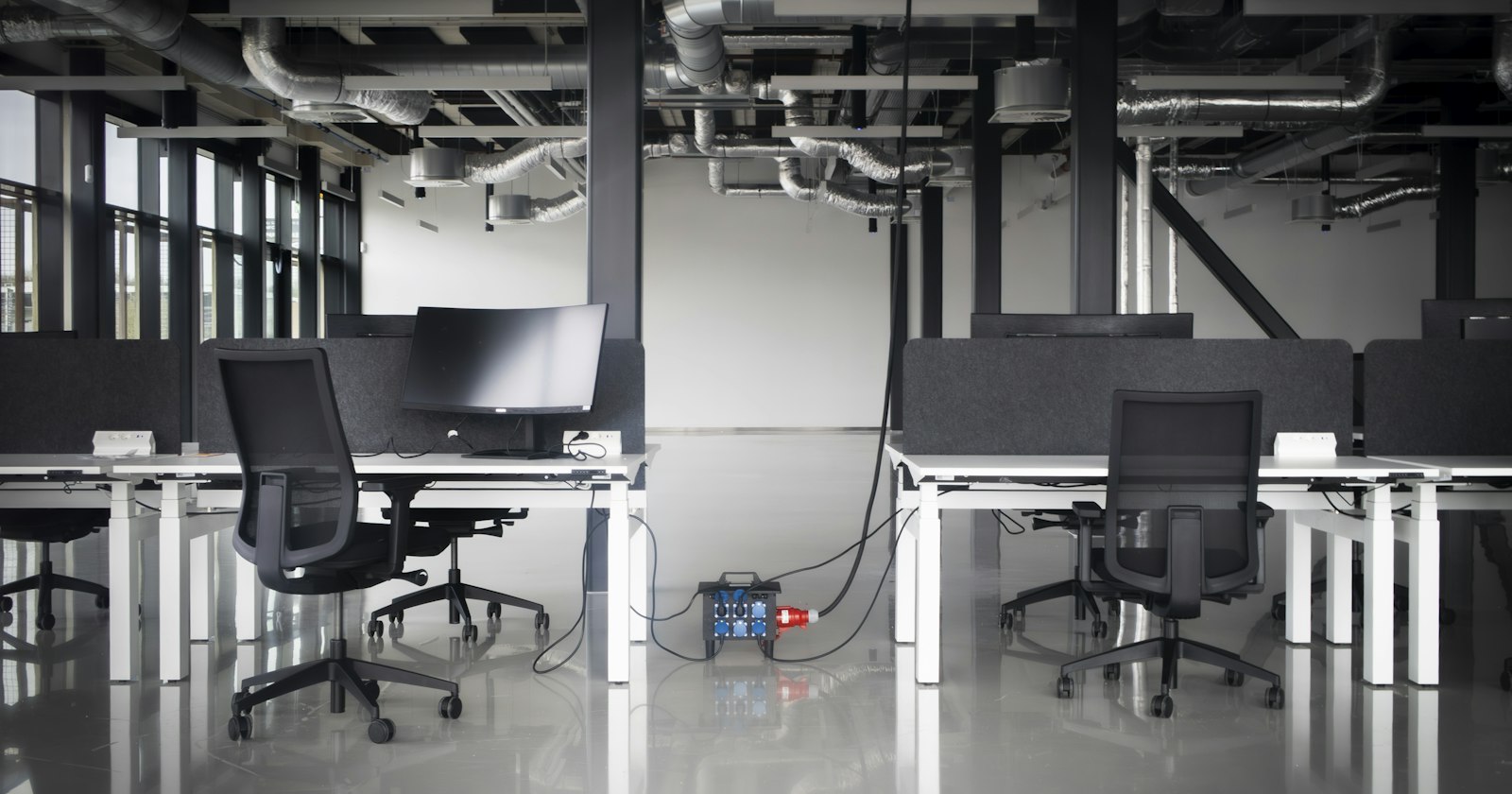
At DVT Forum 2026 (Wi-Fi NOW report, October 15) Intel described its lab for Wi-Fi 7 and the upcoming Wi-Fi 8. It is not a set of shielded chambers but a floor of about 21,000 sq ft (roughly 1,950 m²) with real cubicles, across which robots carry client devices. What gets measured is not a speed record next to the access point but the handoff between access points: loss, latency, outage duration. The thesis of the speaker, Mohammad Mansour (Intel): peak speed is no longer the yardstick of platform quality. Candela is developing LANforge in the same direction. A basic version of such a test bed can be built without 2,000 m².
What Intel built
The site runs like a pipeline: driver and firmware regression after every change, 2.4/5/6 GHz bands, access points from different manufacturers, clients on Windows, Linux, Apple, Android and Chrome.
Three kinds of motion: robots carry clients along fixed routes run after run; XY tables move a device across a grid of points; turntables rotate it through 360°, exposing the dependence on the orientation of a laptop's antennas. The robot's coordinates serve as ground truth for verifying 802.11mc/az ranging on a route of about 60 m.
The numbers: on Wi-Fi 7 with a 320 MHz channel Intel achieved more than 4 Gbit/s in a real office space. The figure itself is not the point. During roaming, the team runs video conferencing, voice and streaming in parallel and records where the user would notice the handoff. Mansour noted that a conducted RF path with an attenuator does not always reproduce real over-the-air roaming. Priorities for Wi-Fi 8 (IEEE 802.11bn, Ultra High Reliability): long range, seamless roaming, efficiency at high density. Peak PHY rates are not on the list.
How this relates to TR-398
TR-398 Issue 4 from the Broadband Forum adds Wi-Fi 7 tests to Issue 3: 6.5.5 Preamble Puncturing and 6.5.6 MLO (eMLSR), and 320 MHz appears in Peak Performance. Pass/fail criteria for some of the procedures are still being finalized.
The limits of the methodology lie exactly where Intel is looking. Roaming exists in TR-398 only as Mesh Roam (6.6.3); for ordinary access points there is no mobility test. All measurements take place in chambers, through attenuators and a turntable, with 32 Intel BE200 stations acting as clients. That provides repeatability but does not answer how a client will handle a handoff between three access points in a hallway with concrete columns. SmallNetBuilder notes that the specification allows variation in test bed setup, results from different labs are hard to compare, and some thresholds are too lenient.
What Candela is doing in this direction
Candela describes three tiers of validation: RF chambers, shielded rooms and real test houses. Each tier has its own tool:
- Roam test in Chamber View with 802.11k/v/r: chambers and the attenuator are optional, the roaming script is built from the Neighbor Report, and the report counts successful handoffs and failure types (in Candela's example, the access points were responding en masse with code 17, "no capacity").
- CT718 attenuators: 8 channels, 0–95 dB in 0.5 dB steps, 50 MHz – 8 GHz, list price $9,495. They are used to emulate distance and a client leaving one access point's coverage for another's.
- CanBEE robot: an autonomous platform with LANforge and real clients on board. Payload up to 60 kg, speed 0.3–1.0 m/s, laser navigation to 25 m, about 16 hours of battery life and automatic docking for overnight runs. Scenarios include 802.11k/v/r roaming and Wi-Fi 7 with MLO/SLO, in parallel with YouTube, Zoom and Teams UX tests.
The direction is the same as Intel's: real environment, motion, automation. The difference is scale and availability: CanBEE can be bought or ordered as Test-as-a-Service.
What is reproducible without 2,000 m²
A sensible minimum for an integrator:
- A base layer in chambers: Rate-vs-Range and roaming through attenuators. Inexpensive to repeat after every firmware build.
- An OTA layer on an office floor: 2–3 access points from different vendors, 1–2 real clients plus LANforge emulated stations, a fixed route (a cart along floor markings or a robot). Measure loss, latency and outage time under traffic that imitates a video call.
- Scheduled regression: the same route at night, the report in the morning.
The main challenge is OTA repeatability: people, doors and neighboring networks change the results from run to run. Overnight runs and a fixed route matter more than expensive mechanics.
What this means for the business
The "up to 4 Gbit/s" figure in a datasheet does not protect you from complaints that a Teams call drops when someone walks from their office to a meeting room. Such dropouts reduce productivity and undermine trust in the IT department, and in clinics and on factory floors they cost even more. Testing "on the move" before a purchase or before a firmware update is an order of magnitude cheaper than redoing the Wi-Fi after rollout. An Intel-grade test bed requires a separate building; a "chambers + office route + overnight automation" setup fits within a pilot budget.
What to do
If you are choosing access points or preparing a Wi-Fi upgrade, do not stop at measuring speed next to the access point. Contact TEST4NET: we will discuss a roaming scenario for your floor and your client devices and propose a test program.
Sources
- Wi-Fi NOW: DVT Forum 2026 report — real-world wireless testing and robotic validation with Intel
- Candela Technologies: TR-398 Issue 4 testing with LANforge
- Candela Technologies: CanBEE Autonomous Robot
- Candela Technologies: Chamber View Roam Test with 802.11k/v/r
- Candela Technologies: CT718 programmable attenuator
- Candela Technologies: WiFi station testing
- SmallNetBuilder: Introduction to the TR-398 Wi-Fi Performance Test

Written by
Alexander Zemskov
Alexander Zemskov leads network and security testing at TEST4NET, an independent, vendor-neutral testing lab in Yerevan, Armenia. With 19+ years in performance and load testing on IXIA, Spirent, Keysight, Xena and Xinertel platforms, he runs NGFW, WAF, IPS, DLP and SASE evaluations for telecom operators, banks and system integrators.
Comments