Post 6 of 6: One Test Is Not Enough — Why Security Infrastructure Needs Continuous Validation

Alexander Zemskov
This is the sixth post in a series on evaluating network security products. Part 1: the datasheet gap. Part 2: NGFW traps. Part 3: WAF, IPS, DLP. Part 4: SASE. Part 5: methodology and independent testing.
The previous five posts focused on the procurement stage: how to design a test that produces results you can trust before signing a contract. This post addresses what happens after the contract is signed — and why treating the initial evaluation as a one-time event is one of the most common and costly mistakes in security operations.
The Platform You Bought Is Not the Platform You Will Be Running in Two Years
Every enterprise security platform — NGFW, WAF, IPS, DLP, SASE — receives regular software updates. Firmware releases, security patches, threat intelligence database updates, new feature rollouts, algorithm changes, performance optimizations. Vendors push these on a continuous schedule. In the NGFW space alone, major vendors release firmware updates multiple times per year, with hotfixes and security patches arriving far more frequently.
Each of these updates changes the platform. Sometimes the changes are minor. Sometimes they are not.
A firmware update that introduces a new DPI algorithm — better detection accuracy, broader protocol coverage, more sophisticated evasion resistance — also introduces new processing overhead per inspected session. A threat intelligence database update that adds 50,000 new signatures improves security posture and increases the lookup cost per packet. A new feature that provides genuine operational value — encrypted DNS inspection, improved ML-based anomaly detection, tighter integration with a cloud sandbox — consumes memory, CPU cycles, and potentially dedicated ASIC capacity.
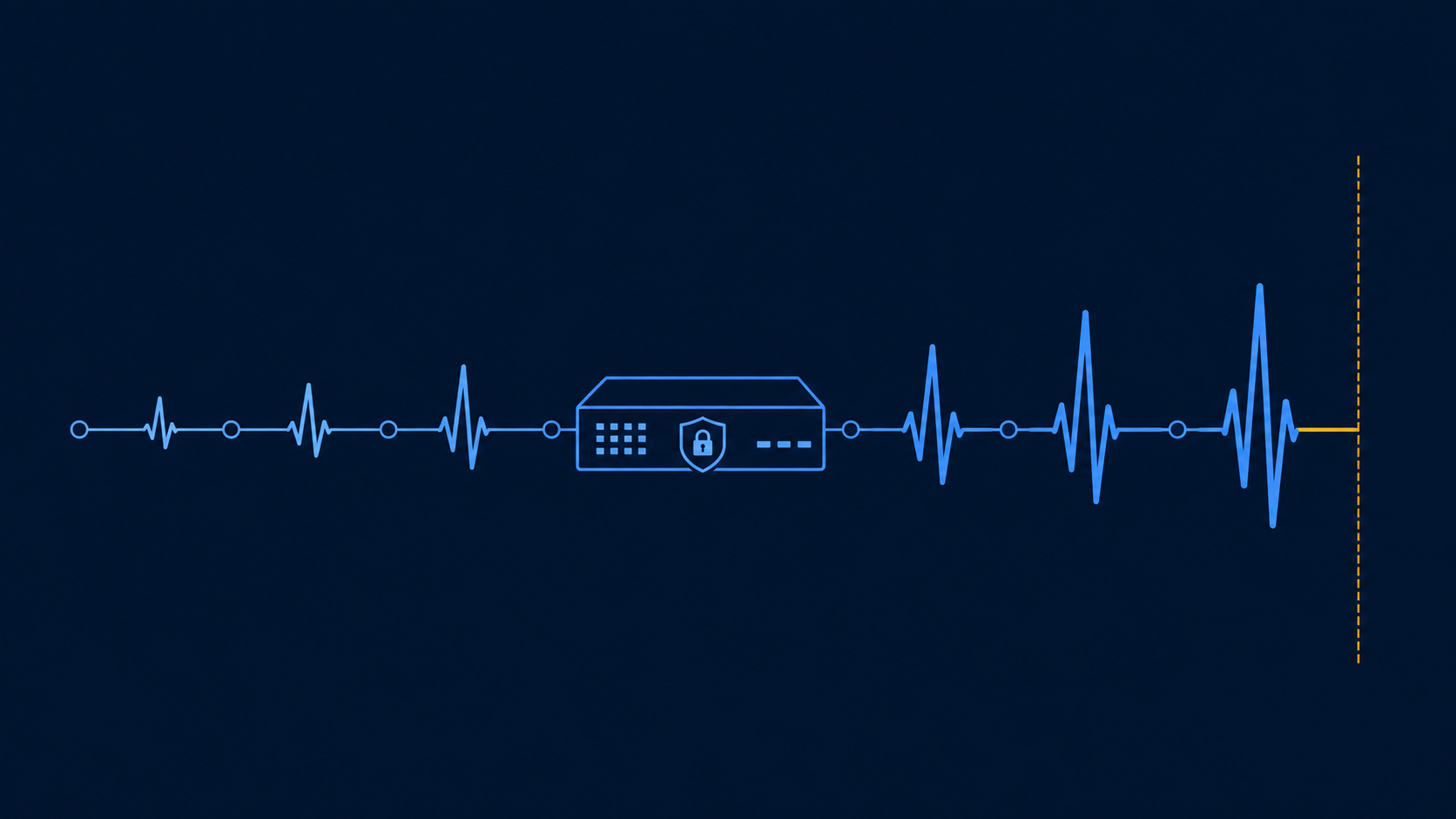
The platform you validated at procurement, at a specific firmware version, with a specific feature set and database state, is not the platform that will be running after 18 months of regular updates. The performance envelope shifts with every significant change. The question is whether you are tracking that shift — or discovering it when a production incident forces the conversation.
Hardware Is a Fixed Constraint. Software Is Not.
This is where the gap between cloud-native and hardware-based security platforms becomes operationally significant in a way that procurement decisions rarely fully account for.
A cloud-delivered SASE platform or a virtual NGFW running on elastic infrastructure has a degree of flexibility when a software update increases resource consumption: the underlying compute can be scaled, additional instances can be spun up, memory and CPU headroom can be added without a hardware procurement cycle. The operational friction is real, and cost increases, but the ceiling is not fixed.
A hardware appliance is a closed resource envelope. The RAM is soldered. The CPU is fixed. The network processor and security ASIC are what they are. When a firmware update increases per-session memory consumption, there is no way to add memory. When a new inspection algorithm adds 15% CPU overhead, there is no way to add cores. When the combination of new features and an updated signature database pushes concurrent session memory usage to 90% of installed RAM, the margin for traffic spikes disappears.
Vendors announce new firmware capabilities with marketing materials that lead with the security and functionality improvements. Resource consumption implications are documented in release notes, if at all, in technical language that rarely translates into a clear statement of "this update will reduce your effective throughput by N% on the following hardware models." The customer sees the feature announcement. The performance impact arrives in production.
This is not hypothetical. In practice, organizations running hardware security appliances at 60–70% rated capacity at procurement routinely find themselves at 85–90% rated capacity two or three years into the deployment lifecycle — with no hardware change, no significant traffic growth, and a list of firmware updates that each seemed individually minor.
New Features as a Trojan Horse
There is a specific pattern worth naming directly, because it recurs across vendors and product categories.
A vendor releases a major firmware version that introduces capabilities the customer genuinely wants: better visibility into encrypted traffic, improved application identification, a new threat detection engine with demonstrably higher catch rates. The security team evaluates the new capabilities, confirms they address real gaps in the current posture, and schedules the upgrade.
What does not get evaluated — because no structured test exists for it — is the performance impact of enabling those new capabilities on the existing hardware, under the production traffic profile, at production load levels.
The upgrade is deployed. The new features are enabled. For the first few days, everything appears normal. Then, gradually or suddenly depending on the nature of the change, the symptoms appear: latency increases under peak load, connection setup rates degrade, memory utilization trends upward and does not come back down, and the first tickets arrive from users reporting slowness in applications that were fast before.
The incident response process begins. The conclusion, eventually, is that the new firmware on the existing hardware at the current traffic volume no longer has sufficient headroom. The options are to roll back the firmware (losing the security improvements), disable the new features (losing the reason for upgrading), or accelerate hardware refresh (unplanned capital expenditure).
All three outcomes could have been identified before the production deployment. None of them require expensive or elaborate testing. They require a structured pre-deployment validation process.
Pre-Deployment Validation: What It Actually Requires
Validating a security platform update before production deployment does not require reproducing the full procurement PoC. It requires answering a more targeted set of questions.
Throughput regression. Does the updated firmware maintain throughput within an acceptable tolerance of the previous version, under the same traffic profile? A 5% regression may be acceptable. A 20% regression is a capacity planning event.
Resource consumption at production load. What are CPU utilization, memory consumption, and concurrent session counts at representative production load under the new firmware? How does this compare to the previous version? What is the new headroom margin?
Correctness of new features. Do the new capabilities function as documented? Do they interact correctly with existing policies? Do they produce unexpected changes in traffic handling behavior?
Security regression. Does the update maintain or improve detection effectiveness? Firmware changes that touch the DPI engine, the rule matching logic, or the protocol parsers can introduce regressions in detection coverage — not because the vendor intended it, but because complex systems change in non-obvious ways. This should be verified, not assumed.
Rollback viability. If the update produces an unexpected problem in production, can it be reversed cleanly? Testing the rollback path before deploying the update is the difference between a planned rollback taking 20 minutes and an emergency rollback taking four hours while a production system is degraded.
The Case for a Permanent Testing Capability
The cumulative argument of this post is the case for continuous testing as an operational discipline — not testing as an episodic activity triggered by procurement events.
At the point where an organization is managing multiple security platforms, each with its own update cadence, operating across a production environment where performance and security baselines matter, the operational model shifts. Ad hoc testing before major updates is a start. A structured, repeatable validation process with defined baselines, regression thresholds, and a clear workflow from "update released" to "approved for production" is the operational maturity level that eliminates the class of incidents described above.
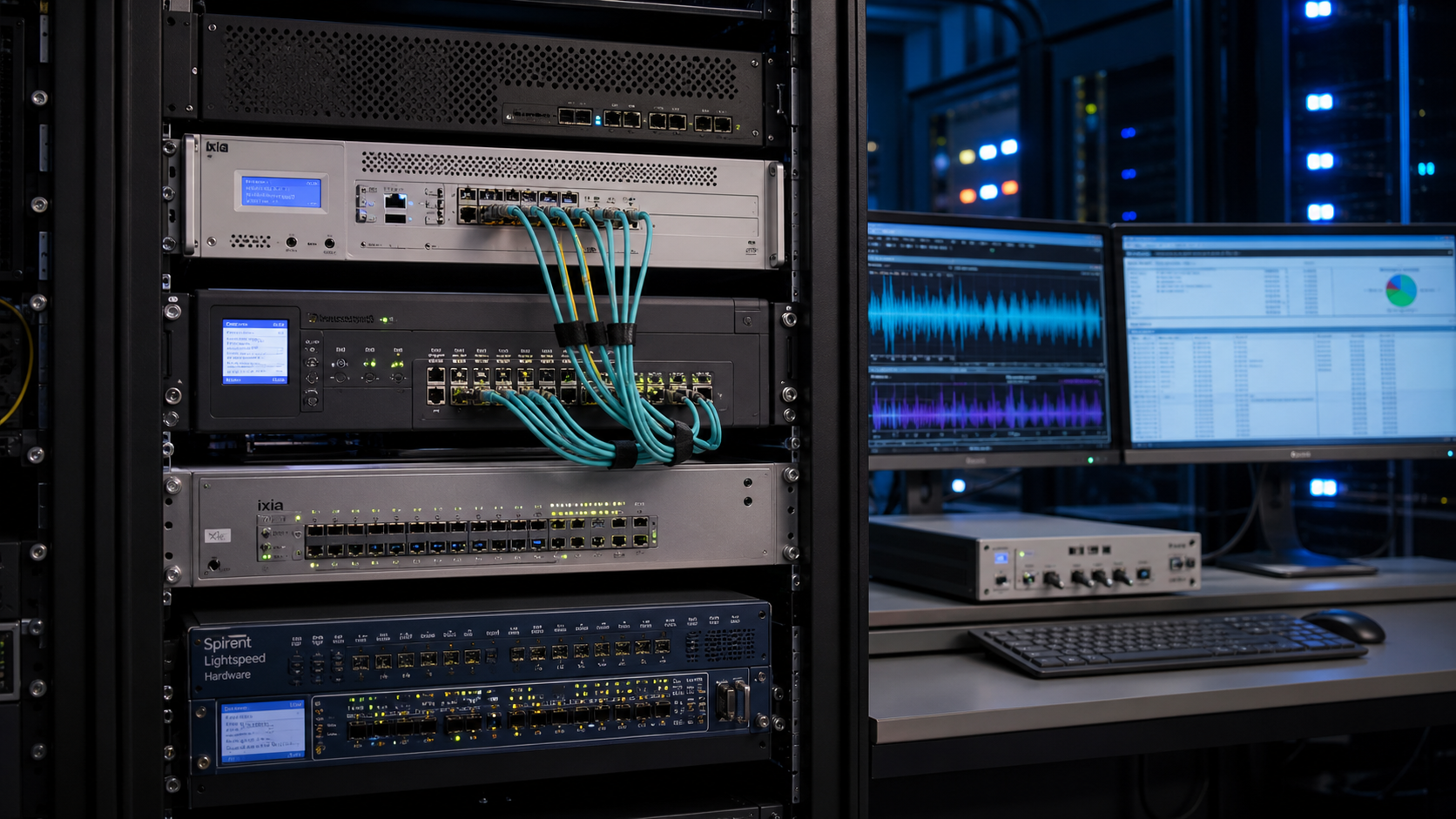
Building this capability in-house is the right answer at a certain scale — when the volume of testing, the frequency of updates requiring validation, and the internal staff available to operate the process justify the investment in permanent test infrastructure and tooling. At that point, owning a dedicated test environment with commercial-grade traffic generation gives the security team a capability that pays dividends across procurement, update validation, incident response, and capacity planning.
For organizations that are not yet at that scale — or that need the capability immediately without the lead time of building internal infrastructure — the operational model is an ongoing relationship with an independent laboratory. Not a one-time procurement engagement, but a repeatable process: update is released, validation test is run against the agreed baseline, results are compared, go/no-go decision is made before production deployment.
The cost of that process per update cycle is predictable and bounded. The cost of an unvalidated update causing a production degradation — engineering time, incident response, potential emergency hardware procurement, business impact — is not.
A Practical Framework for Update Validation
Regardless of whether testing is conducted internally or through an independent laboratory, the process requires three elements to be consistent and defensible.
A frozen baseline. At procurement validation (or at the point of establishing the testing program), a performance and security baseline is captured against the agreed traffic profile. This is the reference point against which all subsequent updates are compared. Throughput at defined AppMix, resource utilization at defined load levels, security detection rates against the agreed attack profile. These numbers are locked and do not change until a deliberate decision is made to update the baseline.
A defined regression tolerance. What magnitude of change in any measured parameter requires escalation before production deployment? The thresholds should be defined in advance and agreed between the security team and operations — not determined retrospectively during an incident review. Typical parameters: throughput regression greater than X%, memory utilization increase greater than Y percentage points, concurrent session capacity reduction greater than Z%.
A repeatable test execution process. The test must be executable by whoever runs it — internal team, external lab — and produce comparable results every time. Same traffic profile, same load levels, same measurement methodology. Variability in execution methodology produces variability in results that makes trend analysis impossible.
What Does Not Change
One thing remains constant regardless of how mature the continuous testing program becomes: the validity of the test depends on the quality of the traffic profile and the accuracy of the measurement tools.
All the problems described in earlier posts in this series — AppMix drift, PCAP replay predictability, security effectiveness testing in isolation — apply equally to update validation testing as they do to procurement testing. A baseline captured with unreliable tooling is not a baseline. A regression comparison made with a tool that produces inconsistent results does not produce defensible conclusions.
The investment in proper methodology and proper tooling at the procurement stage pays forward into every subsequent test run across the lifecycle of the platform.
Summary: Testing Is Operational Infrastructure, Not a Project
The procurement test is the beginning of a testing relationship with a security platform, not the end of it. Hardware constraints are fixed; software complexity grows with every update cycle. New features and algorithms that vendors market as improvements can silently consume the performance headroom that validated the hardware selection in the first place.
The organizations that avoid the class of incidents described in this post share one characteristic: they treat testing as ongoing operational infrastructure, not as a one-time project cost. They have a baseline. They have a process. They run it.
For organizations building toward that maturity — or needing the validation capability now, before building internal infrastructure — TEST4NET LLC provides both the initial procurement evaluation and the ongoing update validation framework.
One engagement model, consistent methodology, results that are comparable across every point in the platform lifecycle.
Contact TEST4NET
Complete series:
Post 1: The Datasheet Lie | Post 2: NGFW | Post 3: WAF, IPS, DLP | Post 4: SASE | Post 5: How to Test | Post 6: Continuous Validation